Safe Space Mapping: Build Calm, Boundaries, and Support
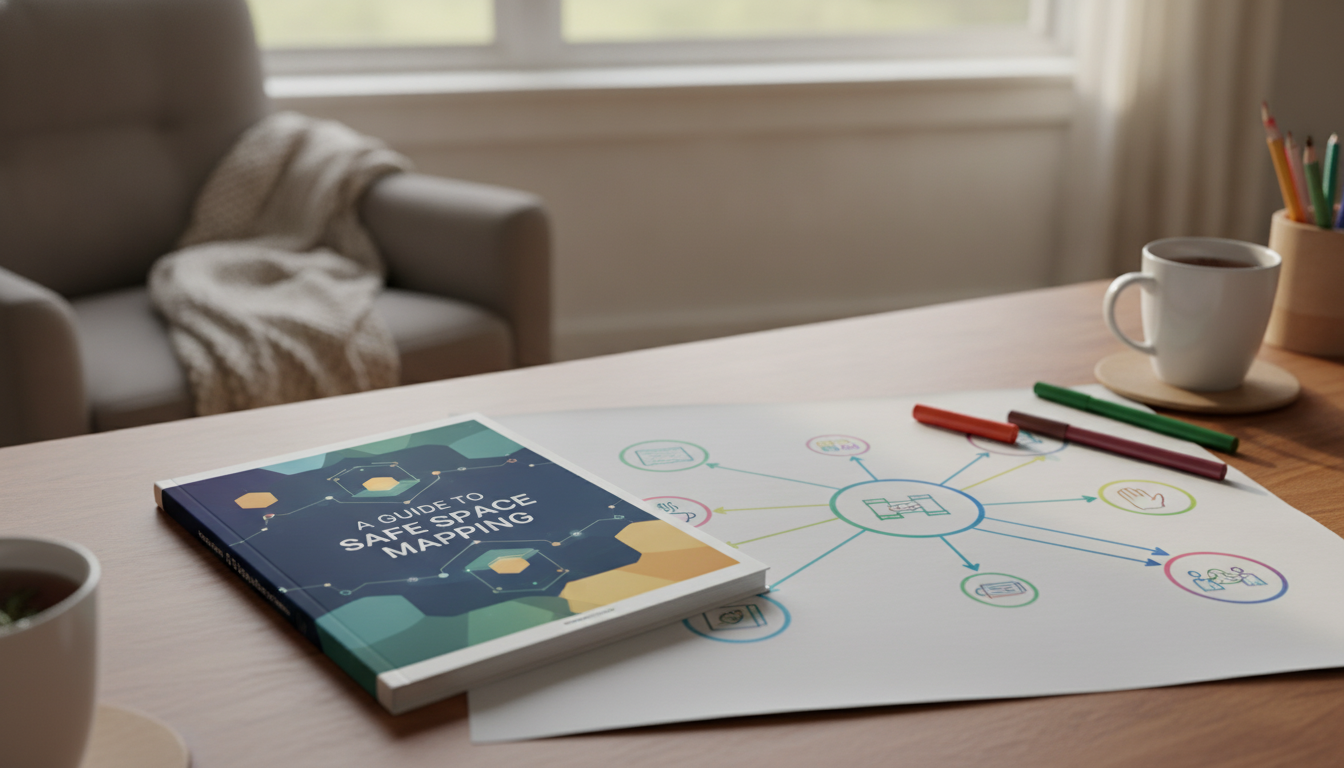
Safe Space Mapping: A Practical Guide to Understanding, Creating, and Using Safe Spaces
Safe space mapping is a hands-on way to identify where safety, support, and triggers show up across everyday life—at home, at work or school, online, and inside relationships. When those patterns are visible, it’s easier to make choices that protect well-being, set boundaries that actually hold, and build routines that reinforce stability. The digital ebook A Guide to Safe Space Mapping | Digital Ebook on Understanding, Creating & Using Safe Spaces breaks the process into clear steps so the “what do I do now?” moments become more manageable.
What “safe space” means in real life
A safe space isn’t one fixed thing. It can be a physical location (a bedroom corner, a café, a counselor’s office), a social setting (a small group chat with trusted friends), or a structured routine (a weekly support meeting or a consistent wind-down ritual).
Safety has layers. Emotional safety can look like reduced judgment and fewer “gotcha” reactions. Psychological safety means there’s room to be honest without punishment or ridicule. Practical safety covers basics like privacy, accessibility, reliable exits, and the ability to leave without escalation.
A safe space also isn’t the same as avoiding discomfort. The point is regulation and recovery—so hard conversations, responsibilities, and growth can happen with resources in place instead of in survival mode. Because safety cues are personal, factors like lighting, sound, crowd density, identity visibility, language, and power dynamics can shift a place from steadying to stressful.
Why mapping works: turning vague stress into usable signals
Stress often feels global—like it’s “everywhere.” Mapping makes it specific. Over time, it reveals which environments consistently drain energy, which people reliably lower anxiety, and which moments require extra support.
It also helps separate “triggering” from “difficult but manageable.” When the context is tracked—time of day, topic, tone, sensory load, and how much control you have—patterns emerge. That clarity supports planning: choosing exit strategies in advance, lining up recovery activities, and selecting check-in contacts who help you return to baseline.
Another benefit is reduced decision fatigue. Instead of guessing what you can handle on a rough day, a map turns emotional uncertainty into a clearer menu of options.
Core elements of a safe space map
Places
Map home zones, workplaces, public locations, travel routes, and “in-between” spaces like hallways, parking lots, stairwells, and transit stops. These transitional areas often carry hidden stress (crowding, unpredictability, lack of privacy).
People
Include supportive contacts, neutral contacts, and high-risk dynamics. Note how interactions tend to end: calmer, tense, depleted, or dysregulated. This can be more useful than labeling someone as simply “good” or “bad.”
Activities
Add grounding routines, creative outlets, movement, rest, and habits that reliably shift mood—for better or worse. A map is honest: it can include doomscrolling, overcommitting, or late-night debates if they reliably raise stress.
Rules and boundaries
Define what is always allowed, sometimes allowed, and never allowed—especially around privacy, topics, conflict, and how quickly a conversation can escalate.
Signals
Track body cues and early warning signs: tight chest, racing thoughts, shutdown, irritability, clenched jaw, or a sudden urge to disappear. These signals often show up before the mind has a clear story.
How to build a first map in 30–60 minutes
| Category | Example | Safety (1–5) | Energy Impact | Supports/Exits |
|---|---|---|---|---|
| Place | Bedroom reading corner | 5 | Restores | Phone on silent; warm light; 10-minute timer |
| Person | Trusted friend | 4 | Stabilizes | Text check-in; clear topic boundaries |
| Activity | Walk outside | 4 | Resets | Route with low traffic; music off if overstimulated |
| Place | Open-plan office | 2 | Drains | Noise-canceling headphones; planned breaks |
| Online | Large group chat | 2 | Unpredictable | Mute; leave if conflict starts; block keywords |
Creating safe spaces: practical upgrades that actually stick
Using the map day to day: planning, prevention, and recovery
Common pitfalls and how to avoid them
Who benefits most from safe space mapping
Digital ebook overview: A Guide to Safe Space Mapping
If a structured, revisit-able resource is helpful, A Guide to Safe Space Mapping | Digital Ebook on Understanding, Creating & Using Safe Spaces focuses on defining safe spaces, recognizing patterns, and turning insights into realistic actions—especially during transitions, stressful seasons, or major life changes.
For people who want added support around relational confidence and communication, Build Unshakable Confidence for Dating in 5 Days | Audio Program can pair well with boundary-setting goals by reinforcing steady self-presentation and conversation structure. For routine stability that supports mood, Healthy Meal Plan & Recipe Collection can help reduce daily decision load and create predictable anchors.
Evidence-informed grounding
Many safe space principles align with trauma-informed care and psychological safety frameworks. For additional context, review SAMHSA’s trauma-informed guidance (TIP 57), the American Psychological Association’s materials on psychological safety (APA), and the World Health Organization’s mental health resources (WHO).
FAQ
Is safe space mapping the same as avoiding triggers?
No. Mapping distinguishes supportive, neutral, and draining contexts so you can prepare and regulate; it’s not a rule to avoid everything uncomfortable. Some situations should be avoided for safety, but many can become manageable with better supports and exits.
How often should a safe space map be updated?
A quick weekly or biweekly check-in is usually enough, with extra updates after major changes like a move, a new job, relationship shifts, or a conflict. Safety cues and boundaries evolve, so the map should evolve too.
Can safe space mapping help with online stress and social media overload?
Yes. Mapping platforms, group chats, and content types helps identify what reliably spikes stress versus what feels stabilizing. It also supports practical limits like muting, privacy controls, time windows, and clearer rules for engagement.












Leave a comment